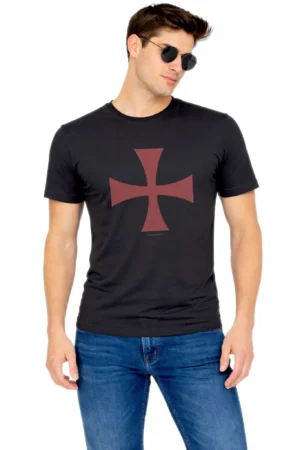



T-shirt with Iberian Wolf symbol

Made from 100% cotton, the t-shirt offers soft comfort, breathability, and a lighter environmental footprint. Available in grey, and black, it’s a timeless staple for any modern wardrobe.
Browse the full SymbolWear collection and discover more symbols of legacy and meaning.
The Iberian Wolf: A Symbol of Wild Spirit and Cultural Legacy
 The Iberian wolf is a subspecies of the grey wolf and currently inhabitates the northwestern regions of Spain and the north of the Douro River in Portugal, with smaller, isolated groups south of the river. Efforts are underway to restore landscapes and promote coexistence to potentially support wolf populations in areas where they are struggling.
In the rugged mountains and dense forests of the Iberian Peninsula, a creature both feared and revered has roamed for centuries: the Iberian wolf. Known for its elusive nature and haunting howl, the Iberian wolf (Canis lupus signatus) is more than a wild animal—it is a living symbol of resilience, strength, and freedom. Today, the stylized silhouette of its howling head serves as a powerful emblem, capturing the imagination of those who value nature, independence, and cultural identity.
Read more about the Iberian Wold in Wikipedia.
Historical and Cultural Background
The Iberian wolf is a subspecies of the gray wolf, native exclusively to the Iberian Peninsula, which includes northern and central Spain and parts of northern Portugal. Its scientific name, Canis lupus signatus, references the distinctive dark markings on its tail and front legs, which distinguish it from other European wolves.
Historically, the Iberian wolf’s presence spanned across most of Spain and Portugal. However, due to human persecution, habitat destruction, and hunting, its range has dramatically decreased. Today, it is primarily found in the northwestern parts of the Iberian Peninsula, especially in the provinces of Castilla y León, Galicia, and Asturias in Spain, and parts of northern Portugal.
Throughout history, the wolf played a dual role in Iberian culture. Feared by farmers for its attacks on livestock, yet admired in folklore and myth, the wolf often symbolized both menace and mystique. In rural legends, it was sometimes portrayed as a noble predator, a guardian of the wild, or even a spiritual guide. In some traditions, its howl was believed to carry messages from the spirit world.
Habitat and Range
Iberian wolves typically inhabit mountainous, forested, and shrubland areas with low human density. They prefer landscapes with cover and elevation—such as the Cantabrian Mountains—that allow for stealthy movement and protection for dens. Mediterranean woodlands, open oak forests, and scrub-covered hills also serve as suitable environments. Their ability to adapt to rugged, fragmented terrain has helped them survive in regions where many other large carnivores have disappeared.
Life in the Pack
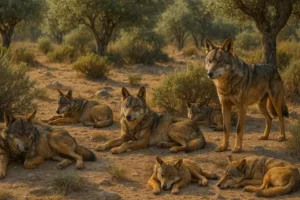 The social life of the Iberian wolf revolves around the pack, a family unit built on cooperation, hierarchy, and survival. Packs are usually composed of a dominant breeding pair—the alpha male and female—and their offspring. These groups may consist of five to seven individuals, though this number can vary depending on environmental conditions.
Each pack operates as a unified force. Members communicate constantly through howls, body posture, facial expressions, and scent marking. These behaviors reinforce bonds, coordinate hunts, and define territory. Within the pack, roles are well structured. The alpha pair leads in decision-making and reproduction, while the others assist in raising pups, guarding the territory, and bringing down prey.
The wolves are most active during twilight and nighttime hours, when they patrol territory, hunt, or relocate to safer ground. Dens are typically hidden in sheltered areas, and young pups are raised with care and vigilance until they can join the adults on hunting missions.
Diet and Hunting Behavior
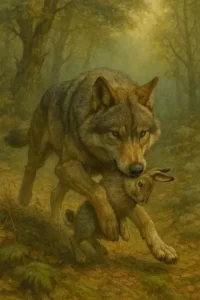 The Iberian wolf is a highly skilled carnivore. Its diet is primarily composed of medium-sized ungulates such as roe deer, red deer, and wild boar. These animals are hunted using pack coordination and knowledge of the terrain, which is often rocky and forested.
When larger prey is scarce, the wolf adapts. It will pursue rabbits, hares, and even rodents, adjusting its hunting strategies accordingly. In some regions, particularly where wild prey is depleted, Iberian wolves have been known to target livestock. This has historically brought them into conflict with farmers, especially in rural areas where livestock represents a crucial livelihood.
The wolf’s hunting tactics depend on cooperation. Packs may encircle prey or drive it into difficult terrain where escape is harder. A single wolf or pair can also hunt smaller animals if separated from the group. Their ability to run long distances and their keen sense of smell allow them to locate and pursue prey with great precision.
The Haunting Howl of the Iberian Wolf
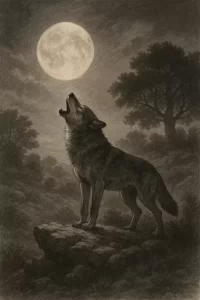
Wolves howl for several reasons. One of the primary purposes is to mark territory and warn rival packs to stay away. This helps to prevent direct confrontations and maintains balance in the ecosystem. Howling also helps members of the same pack to locate one another, especially after long hunts or while roaming large, forested territories. In times of danger, it serves as an alarm call, alerting the group to nearby threats or intrusions.
The howl is also a deeply emotional expression, used during moments of bonding. At dusk or dawn, wolves often join in group howls—a kind of chorus that strengthens pack cohesion. These haunting cries can stir a range of emotions in those who hear them: awe, fear, respect, and a primal connection to the wild.
To humans, the howl has long been a symbol of mystery and wilderness. In Iberian folklore, it was sometimes viewed as a message from the spirit world or a warning of change to come. Today, it remains a chilling yet beautiful reminder of what still exists in the shadowed parts of our natural world.
Conservation and the Future of the Iberian Wolf
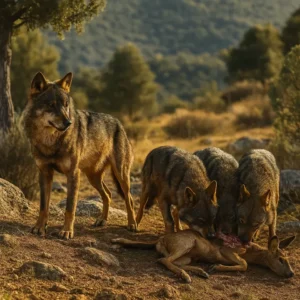 Despite a recent resurgence, the Iberian wolf still faces serious threats. Habitat loss, fragmentation due to road infrastructure, and continued illegal killings remain challenges. In Portugal, the species is officially considered endangered, while in Spain it enjoys varying levels of protection depending on the region.
Conservation efforts have gained momentum in the past decades. EU-backed initiatives have led to monitoring programs, awareness campaigns, and the development of wildlife corridors. Some farmers now use non-lethal livestock protection methods, such as guard dogs and fencing, to coexist with wolves.
Education and ecotourism also play a growing role, transforming the wolf from an object of fear into one of fascination and pride. If properly supported, the Iberian wolf’s future could become a conservation success story—one that preserves both a species and a symbol of natural resilience.
Legacy and Reflection
From myth to reality, from survival to symbolism, the Iberian wolf continues to leave its mark on the land and the people of the Iberian Peninsula. It is more than an animal; it is a reflection of the wild spirit within. Whether alone beneath the moon or moving in a silent pack, the Iberian wolf remains a powerful symbol worth honoring, protecting, and wearing with pride.
Cultural Significance and Modern Symbolism
In contemporary culture, the Iberian wolf embodies a variety of human ideals and values. It is seen as a living symbol of the untamed Iberian wilderness—one that resists domestication and modern encroachment. As a result, it is often associated with strength and endurance, qualities admired by those who face challenges and overcome adversity.
It also symbolizes independence. Much like the lone wolf, the Iberian wolf stands for self-reliance and freedom, appealing to individuals who reject conformity and follow their own path. Its deep cultural roots in Iberian mythology further connect it to notions of identity, heritage, and the land itself.
Environmentalists and conservationists have embraced the wolf as a flag-bearing species for the protection of Iberian ecosystems. In fashion and modern design, the wolf has become a bold emblem for authenticity, courage, and natural connection.
The Wolf as a Wearable Icon
Choosing the Iberian wolf as a symbol to wear is not simply about style—it is about making a statement. It reflects an awareness and respect for the wild, a declaration of inner strength, and an allegiance to a deeper cultural and ecological history.
Wearing the image of the Iberian wolf signifies alignment with nature’s rhythms and the values of perseverance, individuality, and connection to heritage. In this way, the symbol transcends decoration to become an extension of personal belief and identity.
The Collection
Explore our full SymbolWear™ T-shirt collection and discover more symbols of legacy and meaning.
About the T-shirt
Information about the materials, fabrics, sizes, delivery and return policy.